Denying the King
When Henry VIII broke from the Roman Catholic Church in the 1530s, it wasn't a sudden crisis of conscience — it was the culmination of years of political manoeuvring, personal ambition, and financial calculation. The English Reformation is often reduced to a story about a king who wanted a divorce, but the reality is far more layered. Religion, power, and money were inextricably tangled, and Henry's decision to declare himself Supreme Head of the Church of England reshaped the country for centuries.
The question of an heir
At the heart of the conflict was Henry's desperate need for a male heir. His marriage to Catherine of Aragon had produced one surviving child — a daughter, Mary — and by the late 1520s, Henry was convinced the union was cursed. He sought an annulment from Pope Clement VII, arguing that the marriage had been invalid from the start. Clement refused. What complicated matters enormously was that Catherine's nephew, Holy Roman Emperor Charles V, held considerable sway over the papacy at the time. Granting Henry's request was simply not an option for Clement, regardless of the theological arguments involved.
Power, not just piety
Henry's break with Rome was as much about authority as it was about marriage. For decades, the English Church had operated under dual loyalties — to the Crown and to Rome — and tensions had been simmering long before Anne Boleyn entered the picture. Henry and his chief minister Thomas Cromwell moved strategically, passing a series of Acts through Parliament between 1532 and 1534 that gradually severed England's ties to papal authority. The Act of Supremacy in 1534 made it official: Henry was now the supreme head of the Church of England.
The dissolution of the monasteries
If there was one act that laid bare the financial motivations behind the Reformation, it was the dissolution of the monasteries. Between 1536 and 1541, Cromwell oversaw the systematic closure of over 800 monasteries, priories, and convents across England. Their assets — land, buildings, gold, and treasure — were seized by the Crown. It was an extraordinary transfer of wealth. Henry used the proceeds to fund his military campaigns and reward loyal nobles, fundamentally altering the social and economic landscape of England in the process.
Faith caught in the crossfire
For ordinary English men and women, the Reformation was deeply disorienting. Religious practices that had defined daily life for generations — pilgrimages, prayers for the dead, the veneration of saints — were condemned or outright banned. Some welcomed the changes, particularly those drawn to the new Protestant ideas spreading from continental Europe. Others were horrified. The Pilgrimage of Grace in 1536, a mass uprising in the north of England, showed just how volatile the religious climate had become. Henry crushed it ruthlessly, executing its leaders and reinforcing that dissent would not be tolerated.
A reformation on Henry's terms
What made Henry's religious settlement so unusual was its ideological ambiguity. Henry was never a Protestant in the doctrinal sense. He retained many Catholic practices and beliefs, including transubstantiation, and continued to persecute reformers he deemed heretical. His Reformation was, above all else, an assertion of royal supremacy — a reorganisation of institutional power rather than a theological revolution. It was left to his successors, Edward VI and eventually Elizabeth I, to define what the Church of England would actually believe.
A legacy written in stone
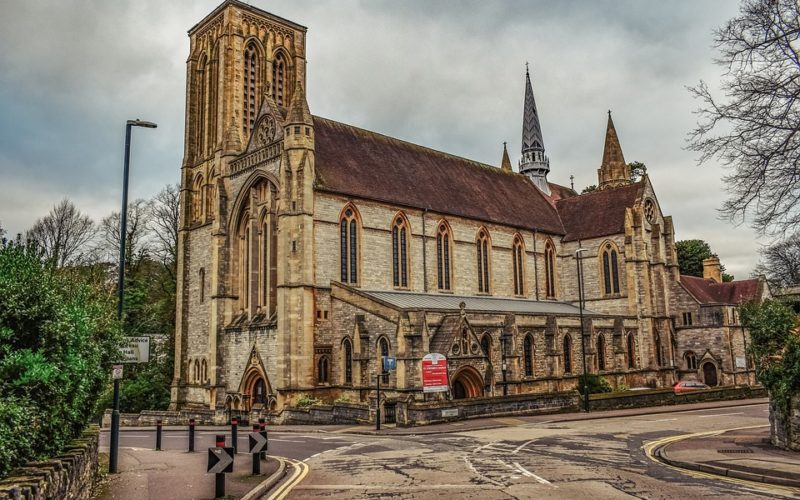
The consequences of Henry's clash with Rome proved permanent. England never returned to papal obedience, and the Church of England remains independent to this day. The dissolution of the monasteries erased centuries of religious heritage and shifted land ownership in ways that persisted for generations. Henry's Reformation didn't emerge from a single motive — it grew from the collision of dynastic anxiety, political ambition, and institutional greed. Understanding that collision is essential to understanding how modern Britain came to be.